Cannabis and Sleep: Better Rest in Albuquerque
Cannabis, Sleep Hygiene, Albuquerque, 1UP Dispensary
Cannabis and Sleep Hygiene in Albuquerque: How Cannabinoids, Terpenes, and Smart Dosing Can Support Better Rest
TL;DR: Can Cannabis Really Help You Sleep Better in Albuquerque?
Yes—when used thoughtfully, low to moderate doses of CBN, CBD, and THC can help many adults in Albuquerque’s high-desert climate fall asleep faster, feel calmer at night, and wake more refreshed. The best results come from pairing sleep-focused products from 1UP Dispensary (like CBN-rich edibles, balanced THC:CBD tinctures, or carefully dosed RSO) with strong sleep hygiene habits—consistent bedtimes, dark cool rooms, limited screens, and good hydration for the dry air.
Key Takeaways for Better Sleep with Cannabis in Albuquerque
Cannabis supports, but does not replace, good sleep hygiene—especially in Albuquerque’s dry, high-altitude environment near the Sandia Mountains and along Route 66.
CBN and CBD (often combined) may be more sleep-friendly long term than very high-THC formulas alone. To understand how these two cannabinoids differ, you can explore our in-depth guide on CBD vs. THC for wellness and sleep.
Relaxing terpenes like myrcene, linalool, and beta‑caryophyllene can gently enhance nighttime calm and body relaxation.
Start low and go slow with dosing, especially with potent products like RSO or high-THC vapes and concentrates.
1UP Dispensary in Albuquerque offers rotating sleep-oriented options—check the live menu and ask budtenders for CBN/CBD-rich, indica-leaning, and terpene-informed products.
Struggling with restless nights in Albuquerque’s high desert? Thoughtfully chosen cannabis products—paired with solid sleep hygiene—may help you fall asleep faster, stay asleep longer, and wake feeling more restored. Here’s a research-informed guide plus practical dosing tips and sleep-friendly product picks from 1UP Dispensary.
Cannabis and Sleep Hygiene: Partners, Not Magic Bullets
Cannabis can be a useful tool for sleep, but it works best when it supports—not replaces—good sleep hygiene. Research through 2025–2026 shows that cannabinoids often improve how people feel about their sleep, even when objective measures like sleep stages are more mixed (PubMed 2025 meta-analysis). Meanwhile, poor habits like late-night screens, heavy evening meals, and irregular bedtimes continue to sabotage rest, no matter what’s in your nightstand.
In Albuquerque, where dry air, altitude, and busy schedules can already disrupt sleep, focus on the basics first. Whether you live near Nob Hill along Central Avenue/Route 66, in the North Valley, or up toward the Foothills by the Sandia Mountains, these habits help your body wind down:
Keep a consistent bedtime and wake time—even on weekends, even after late nights in Downtown Albuquerque or Old Town.
Dim lights and avoid phones or laptops 60–90 minutes before bed to counteract blue-light exposure.
Cool, dark, quiet bedroom; consider a fan or white noise for city sounds from I‑25, I‑40, or late-night Route 66 traffic.
Limit caffeine after early afternoon and avoid heavy late-night meals or alcohol, especially at higher altitude in central New Mexico.
💡 Local Tip: Albuquerque’s dry climate can worsen nighttime congestion and snoring. Hydrate well and consider a humidifier alongside any cannabis sleep routine.
How Cannabinoids and Terpenes Can Support Better Rest
Modern research paints a nuanced picture: cannabinoids may help people fall asleep faster and feel more satisfied with their sleep, especially when pain or anxiety are part of the problem. But not all cannabinoids—and not all products—work the same way. If you’re still learning the basics, our educational piece on Indica vs. Sativa vs. Hybrid strains can help you understand why some varieties feel more relaxing at night.
CBN, CBD, and THC: Different Roles at Bedtime
Recent systematic reviews suggest that CBN (cannabinol) and moderate-dose CBD combined with CBN may be especially promising for insomnia, while THC-heavy formulas can bring more side effects without clear long-term advantages (PubMed 2026 insomnia meta-analysis).
CBN: Early 2026 reviews describe CBN as a “dual restorative” cannabinoid that may support deeper, more consolidated sleep with fewer awakenings (CBN review 2026). Typical study doses: roughly 20–100 mg.
CBD: On its own, CBD isn’t a guaranteed sleep aid, but in moderate doses (50–300 mg) it may reduce anxiety and pain, indirectly improving sleep for some people.
THC: Can make you feel drowsy and shorten time to fall asleep, but higher doses are linked to next-day grogginess and tolerance. Withdrawal can temporarily worsen sleep (Sleep Medicine Reviews 2025).
Terpenes: The Aromatic Allies in Your Nighttime Routine
Terpenes are the aromatic compounds that give cannabis its scent—and may gently shape its effects. A 2025 trial combining CBD with small doses of terpenes like linalool (lavender-like), myrcene (musky, often “couch-lock”), and limonene found a modest but meaningful increase in restorative slow-wave and REM sleep for some participants (CBD + terpene RCT 2025). For a deeper dive into these aromatic compounds, check out our beginner-friendly guide, Terpenes 101.
When browsing 1UP Dispensary’s Albuquerque menu, consider products that highlight relaxing terpene profiles—especially myrcene, linalool, beta-caryophyllene, or terpinolene—if your goal is a calm, body-heavy wind-down rather than a racy, cerebral high. These terpene-forward options can be especially helpful after long days commuting across the Duke City or spending time in New Mexico’s bright high-desert sun.
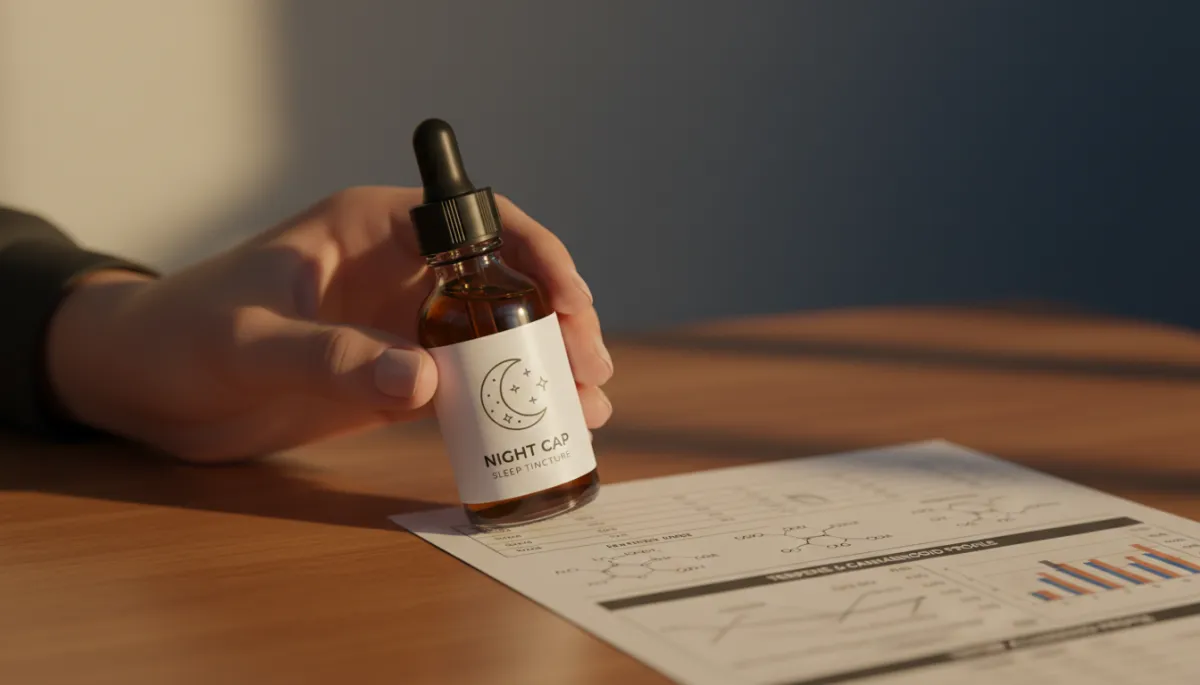
Checking cannabinoid and terpene profiles helps match products to your unique sleep goals.
Practical Dosing Tips for Nighttime Cannabis Use
Everyone’s endocannabinoid system is different, so there’s no one-size-fits-all dose. Still, research and real-world experience point to a few safe, practical guidelines for Albuquerque adults using legal cannabis for sleep. Always consult your healthcare provider, especially if you take other medications or have medical conditions. If you’re curious about how different consumption methods affect onset and duration, our Edibles 101 guide is a helpful companion read.
1. Start Low, Go Slow—Especially with THC
For edibles or tinctures, many adults start around 1–2.5 mg THC combined with CBD or CBN, then slowly increase as needed over multiple nights.
With CBN-focused products, a gentle starting range might be 5–10 mg CBN about 60–90 minutes before bed, titrating up toward 20 mg if needed and tolerated, staying below the higher clinical trial doses unless guided by a professional.
2. Time Your Dose with Your Sleep Cycle
Edibles and tinctures: Take them 60–90 minutes before your target bedtime; they can take time to kick in but last longer through the night.
Inhaled products (vapes, flower): Onset is faster (minutes), but effects may fade sooner. These can be helpful for people who mainly struggle with falling asleep rather than staying asleep.
3. Keep a Simple Sleep Journal
Because research shows that heavy or long-term cannabis use can sometimes be associated with poorer sleep quality overall (Sleep Health survey 2026), it’s wise to track your own response. Note your product, dose, time taken, how quickly you fell asleep, nighttime awakenings, and how you feel the next morning. If your sleep worsens or you feel foggy, scale back or take tolerance breaks.
⚠️ Safety Reminder: Never combine high-dose cannabis with alcohol, avoid driving or operating machinery after dosing, and keep products locked away from children and pets.
Sleep-Friendly Product Picks from 1UP Dispensary in Albuquerque
1UP Dispensary in Albuquerque, New Mexico carries a rotating menu of flower, edibles, tinctures, vapes, and concentrates. Because inventory changes frequently, always confirm availability on their live online menu and review each product’s Certificate of Analysis (COA) for accurate potency and terpene data. As of mid‑2026, here are some sleep-oriented options and shopping strategies to discuss with a budtender, whether you’re coming from UNM, Uptown, Westside, or the International District.
1. DROOL RSO SLEEP 1g Syringe (High-THC Concentrate)
On 1UP’s menu, the DROOL RSO SLEEP 1g Syringe is one of the few products explicitly labeled for sleep, clocking in around 82.87% THC (Weedmaps listing). This is a potent, full-extract concentrate designed for very small doses.
Consider this option if you are an experienced THC user who already tolerates high potency and wants a compact bedtime dose.
Start with a tiny grain-of-rice–sized amount orally or in a capsule 60–90 minutes before bed, and do not redose on the same night until you know how it affects you.
2. Edibles and Tinctures: Look for CBN, CBD, and Indica-Leaning Profiles
While specific brands and strengths change, 1UP’s categories often include gummies, chocolates, drinks, and tinctures that can be excellent for sleep when they feature:
CBN-rich formulas (for example, “sleep” or “nighttime” gummies with THC:CBN ratios like 1:1 or 2:1).
Balanced THC:CBD tinctures (such as 1:1), which may soften THC’s intensity while still supporting relaxation.
Indica-dominant or “relax” labeled edibles with myrcene- and linalool-forward terpene profiles.
Use the live menu filters or ask a budtender to help you locate options that combine moderate THC with CBN and supportive terpenes rather than relying on very high THC alone. When you’re ready to explore current offerings, you can head directly to the 1UP Dispensary shop page to browse what’s in stock.
3. Flower, Pre-Rolls, and Vapes for Faster Onset
If your main issue is lying awake for an hour before drifting off, a few small inhaled puffs of an indica-leaning strain 15–30 minutes before bed may help you relax more quickly. At 1UP, look for:
Strains described as “heavy,” “sedating,” “couch-lock,” or “nighttime,” especially those with myrcene-dominant terpene tests.
Vape cartridges that highlight CBN or indica formulations specifically marketed for evening use.
📌 Key Takeaway: For many people, the sweet spot is a modest, consistent dose of a CBN- or CBD-supported product, taken on a regular sleep schedule, rather than chasing knockout doses of high-THC products.
Putting It All Together: Your Albuquerque Sleep Routine with 1UP
A thoughtful cannabis sleep plan in Albuquerque might look like this: you dim the lights, put your phone away, and sip water while journaling your day. About an hour before bed, you take a low-dose CBN or balanced THC:CBD edible from 1UP Dispensary, or a carefully measured rice-sized portion of a sleep-labeled RSO if you’re experienced. You track how you feel over a couple of weeks, adjusting slowly and keeping your provider in the loop.
Evidence suggests that when cannabinoids and terpenes are used intentionally—alongside strong sleep hygiene—they can help many adults fall asleep more comfortably and wake feeling more refreshed. For personalized, up-to-date guidance on dosing and product selection, visit 1UP Dispensary in Albuquerque, NM, explore their live menu, and lean on their budtenders’ local expertise as you build a nighttime routine that truly works for you in New Mexico’s high desert.
FAQs: Cannabis, Sleep, and 1UP Dispensary in Albuquerque
1. Does cannabis really help with insomnia in Albuquerque’s high-desert climate?
Research up to 2026 suggests that cannabinoids like CBN, CBD, and THC can help some adults fall asleep faster and feel more satisfied with their sleep, especially when pain or anxiety are involved. In Albuquerque’s dry, high-altitude environment, pairing cannabis with good sleep hygiene—hydration, a cool dark bedroom, and consistent bedtimes—tends to work better than relying on cannabis alone. Outcomes vary, so it’s important to start low, go slow, and track how you personally respond.
2. What’s the best cannabis product at 1UP Dispensary for sleep?
There is no single “best” product, but many Albuquerque customers do well with CBN-rich gummies, balanced THC:CBD tinctures, and indica-leaning edibles or vapes. For experienced THC users, the DROOL RSO SLEEP 1g Syringe at 1UP is a high-potency option designed for tiny doses. Newer or more sensitive users often prefer low-dose edibles or tinctures that combine THC with CBN and CBD plus relaxing terpenes. Always check the live menu and ask a budtender for current sleep-oriented options.
3. How much THC, CBD, or CBN should I take at night?
Dosing is highly individual, but many adults in New Mexico start with 1–2.5 mg THC combined with CBD or CBN and slowly adjust over several nights. For CBN-focused products, a common starting range is 5–10 mg CBN about 60–90 minutes before bed, increasing cautiously if needed. Study doses for CBN often reach 20–100 mg, but you should stay on the lower end unless you’re working with a healthcare professional who understands cannabis medicine.
4. Is high-THC RSO safe to use for sleep?
High-THC RSO products like DROOL RSO SLEEP are very potent concentrates intended for experienced users who already tolerate strong THC effects. They can be effective for some people when taken as a tiny, grain-of-rice–sized dose 60–90 minutes before bed, but they also carry higher risks of next-day grogginess, anxiety, or overconsumption. If you are new to cannabis, it’s usually safer to begin with lower-dose edibles, tinctures, or CBN/CBD-forward formulas and only consider RSO after careful discussion with a medical professional or knowledgeable budtender.
5. Can I use cannabis for sleep every night, or should I take breaks?
Some adults do use cannabis nightly for sleep, but heavy or long-term use—especially of high-THC products—has been associated with tolerance and, in some studies, poorer overall sleep quality. Many clinicians recommend periodic tolerance breaks, using the lowest effective dose, and prioritizing sleep hygiene so you’re not completely dependent on cannabis. Keeping a simple sleep journal and checking in with a healthcare provider can help you decide whether nightly use or occasional support fits your situation best.
